Is a Brickell condo a smart investment right now? With shimmering towers, a walkable financial district, and year-round demand from professionals and global travelers, the appeal is clear. Still, returns can vary widely from building to building. The difference often comes down to HOA costs, rental rules, and how you structure your financing. In this guide, you’ll get a clear, Brickell-specific framework to evaluate condos side by side so you can make a confident decision. Let’s dive in.
Why Brickell draws renters
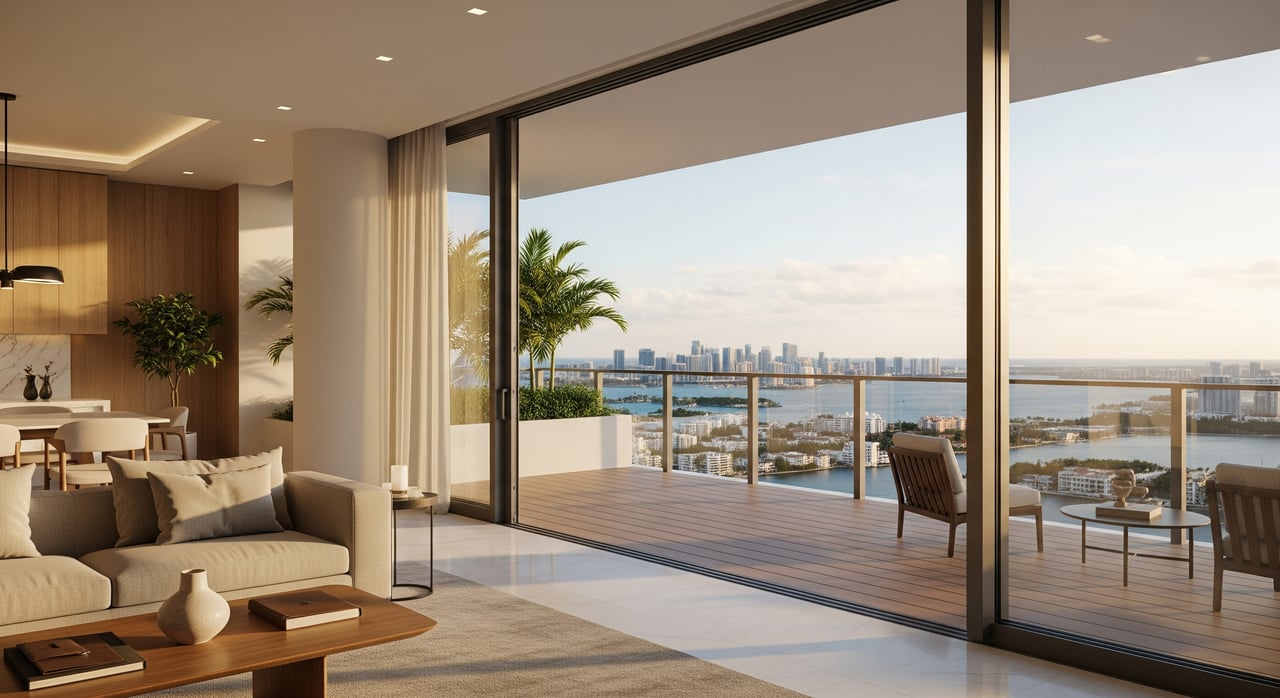
Brickell is Miami’s dense urban core with a high concentration of offices, financial firms, restaurants, and high-rise housing. That mix creates steady demand from commuting professionals and short relocation stays. Many local households are renters and smaller in size, which aligns well with studios and one-bedrooms.
Tourism and corporate travel add seasonal demand through short-term and corporate rentals. Feasibility depends on municipal rules and each building’s HOA policies, so always verify before modeling revenue from short stays. Newer luxury supply is significant in Brickell. While it attracts high-income tenants, it can compress yields compared with older buildings that carry lower acquisition costs.
Start with carrying costs
Your first step is to estimate carrying costs with conservative assumptions. These costs drive your net returns more than any other factor in Brickell.
- HOA dues: Monthly association fees typically cover common areas, staff, amenities, reserves, and building insurance components. Verify what is included.
- Property taxes: Based on assessed value and exemptions. Use the local tax authority’s methodology to estimate.
- Insurance: Unit-level hazard and liability insurance. Flood insurance is often required in Miami-Dade.
- Utilities and services: If the owner pays for water, cable, or internet, include those.
- Management: Expect roughly 6 to 10 percent of collected rent for long-term leases. Short-term management costs more.
- Vacancy and maintenance reserves: Budget 5 to 10 percent or more of gross rent for downtime and routine repairs.
Also factor non-recurring costs:
- Buyer closing costs at purchase and seller costs at exit.
- Capital expenditures and potential special assessments, which are more common in older buildings.
- Financing costs and interest rates, which shape your cash-on-cash returns.
Metrics that matter
Use a few simple formulas to compare options on an apples-to-apples basis.
- Gross scheduled annual rent = monthly rent × 12
- Effective gross income = gross rent − vacancy allowance
- Net Operating Income (NOI) = effective gross income − operating expenses (exclude mortgage)
- Cap rate = NOI ÷ purchase price
- Cash-on-cash return = annual pre-tax cash flow (NOI − annual debt service) ÷ total cash invested
- Gross Rent Multiplier (GRM) = purchase price ÷ gross annual rent
- Break-even rent (monthly) = (annual operating expenses + annual debt service) ÷ 12
Cap rate shows the property’s unlevered yield. Cash-on-cash shows your levered return based on your financing. You should review both. A quick screen with GRM can help you prioritize which condos deserve deeper underwriting.
HOA dues can make or break
HOA dues vary widely in Brickell and can be the single biggest swing factor in your return.
- Verify the monthly amount and what it includes. Water, cable, and portions of building insurance can change your expense profile.
- Review reserve fund health, meeting minutes, and any history of special assessments. These reveal upcoming capital projects.
- Map amenities and staffing. Valet, doorman, and extensive amenities tend to increase dues and can lower net yields.
- Confirm rental restrictions and minimum lease terms. Some buildings limit investors or set minimum stays.
As a general range, older mid-rise buildings may have lower dues that can run roughly 300 to 800 dollars per month, while luxury towers with extensive amenities may run 1,000 to 3,000 dollars or more per month depending on size and services. Always rely on the building’s official HOA documents for precise figures.
Rental demand and pricing power
When you model rent, anchor it to what similar units in similar buildings actually achieve. In Brickell, studios and one-bedrooms often see stronger renter pools and shorter vacancies than larger units designed for long-term households.
Professionally managed buildings with strong amenities can command higher rents and lower vacancy. The tradeoff is usually higher HOA dues. Seasonality is more noticeable with short-term stays, while annual leases tend to be steadier. Check current listings and talk to local managers to ground your rent and vacancy assumptions.
Pre-construction vs resale
Pre-construction benefits
- Potentially lower early pricing or incentives in some cycles.
- Deposit schedules spread over time, which can enhance capital leverage.
- Possible appreciation between contract and delivery in rising markets.
Pre-construction risks
- Delivery delays and changing market conditions at completion.
- No cash flow until delivery and potential carrying costs on deposits or financing.
- Contract limits on renting before final closing and potential assignment fees.
- Financing and appraisal risk at delivery, plus condo project approval considerations.
- Final HOA budgets and assessments are not fixed until stabilization.
Due diligence should include the developer’s track record, deposit and assignment terms, rental policy, parking, insurance and reserve planning, and absorption for similar product scheduled to deliver around the same time in Brickell.
Resale benefits
- Immediate leasing potential with known HOA dues and rental rules.
- Transparent reserve status, building condition, and any assessment history.
- Easier appraisal, financing, and inspection for deferred maintenance.
Resale risks
- Older structures may require capital improvements or face future assessments.
- If buying a fully stabilized unit at a premium, upside may be limited without market growth.
Financing differences
Condo financing can be more restrictive than single-family. Lenders review project-level items like owner-occupancy and budgets. For pre-construction, you often commit cash via deposits and seek permanent financing at delivery, which can be sensitive to interest rate changes. Higher rates reduce cash-on-cash returns, so stress test your debt terms.
Practical comparison checklist
Use this quick checklist to evaluate two Brickell condos side by side.
- Building-level
- Monthly HOA dues and inclusions
- Reserve study, recent meeting minutes, and any approved assessments
- Rental restrictions and minimum lease terms
- Amenities, services, and staffing level
- Building age and major repair history
- Unit-level
- Square footage and layout fit for your target renter
- Parking allocation and transferability
- Achievable rent and typical vacancy for comps
- Unit condition and near-term capex
- Financial inputs
- Purchase price, closing costs, and projected mortgage terms
- Insurance and property tax estimates
- Property management costs
- Planned holding period and exit assumptions
Holding period playbook
Very short holds under two to three years are risky once you account for closing costs and potential taxes. A three to five year horizon can make sense if you expect moderate appreciation plus stable rent. A five to ten year hold is better for buy-and-hold strategies that rely on appreciation, debt paydown, and reduced sensitivity to short cycles.
For pre-construction, plan to hold at least through stabilization post-delivery. That window is often three to seven years, allowing time for leasing, HOA normalization, and market absorption.
Brickell examples (hypothetical)
The following scenarios use illustrative numbers to show the method. Replace the assumptions with current comps and actual HOA documents for any live deal.
Example A: Older mid-rise resale
- Purchase price: 350,000 dollars
- Size: 800 square feet
- Monthly rent: 2,500 dollars
- Annual gross rent: 30,000 dollars
- Vacancy allowance: 6 percent → effective rent 28,200 dollars
- Operating expenses (ex-debt): HOA 600 dollars per month = 7,200 dollars per year; taxes 4,000 dollars; insurance/other 1,200 dollars; management 8 percent of rent = 2,400 dollars
- NOI: 28,200 − (7,200 + 4,000 + 1,200 + 2,400) = 13,400 dollars
- Cap rate: 13,400 ÷ 350,000 = 3.8 percent
If financed 25 percent down with annual debt service of 18,000 dollars:
- Pre-tax cash flow: 13,400 − 18,000 = −4,600 dollars
- Cash-on-cash: negative in year one once you include down payment and closing costs
Interpretation: Lower cap rates are common in Brickell. Returns often rely on appreciation and principal paydown.
Example B: Newer luxury tower with high HOA
- Purchase price: 650,000 dollars
- Size: 1,000 square feet
- Monthly rent: 4,000 dollars → annual 48,000 dollars
- Vacancy allowance: 6 percent → effective 45,120 dollars
- Operating expenses (ex-debt): HOA 1,800 dollars per month = 21,600 dollars per year; taxes 6,000 dollars; insurance/other 1,800 dollars; management 8 percent = 3,600 dollars
- NOI: 45,120 − (21,600 + 6,000 + 1,800 + 3,600) = 12,120 dollars
- Cap rate: 12,120 ÷ 650,000 = 1.9 percent
Interpretation: Higher gross rent does not guarantee higher yield. Elevated dues and operating costs can compress returns. Long-term appreciation or very favorable financing would need to carry the thesis.
Risk factors and mitigants
Key risks to watch in Brickell:
- High HOA and amenity costs that compress yields.
- Rental restrictions for short-term stays or limits on investor ownership.
- New supply that can slow absorption or pressure rents.
- Special assessments or deferred maintenance in older buildings.
- Interest rate and lending environment that affects financing and resale demand.
- Liquidity risk from a high-rise condo market that can be cyclical.
Mitigation steps:
- Review HOA financials, reserve studies, and recent meeting minutes.
- Confirm rental policies, pending litigation, and any approved or proposed assessments.
- Use conservative rent and vacancy assumptions and stress test for HOA increases.
- Check owner-occupancy and investor concentration, which can affect financing and resale.
- Consult local property managers and active rental listings to validate achievable rents.
Putting it all together
A Brickell condo can be a strong lifestyle asset with global appeal, but the numbers must work for your strategy. Start with the HOA line item, then model NOI, cap rate, cash-on-cash, and break-even rent using conservative assumptions. Compare pre-construction and resale paths based on your time horizon, financing, and risk tolerance. Finally, run sensitivity cases on rent, dues, and vacancy so you know your downside before you write an offer.
If you want a discreet, data-informed assessment of specific Brickell buildings and units, schedule a private consultation with the The DeFortuna Group. We will help you verify HOA documents, model realistic returns, and align your purchase with your goals.
FAQs
What should I budget for HOA dues in Brickell?
- HOA dues vary by building and amenities; older mid-rises can be roughly 300 to 800 dollars monthly, while luxury towers often range from 1,000 to 3,000 dollars or more. Always confirm with the building’s official documents.
How do I calculate cap rate vs cash-on-cash for a condo?
- Cap rate equals NOI divided by purchase price. Cash-on-cash equals annual pre-tax cash flow divided by total cash invested. Use cap rate to compare buildings and cash-on-cash to assess your financed return.
Are short-term rentals allowed in Brickell condos?
- It depends on city and county rules plus each building’s HOA policy. Some require registration, minimum stays, or prohibit short-term rentals. Confirm all requirements before assuming short-stay income.
Is a newer luxury tower a better investment than an older building?
- Not always. Newer towers may command higher rents but often have higher HOA dues, which can reduce net yields. Older buildings may offer lower dues and better cash flow but can face special assessments.
How long should I plan to hold a Brickell condo?
- Many investors plan for at least three to five years to offset transaction costs. Five to ten years is common for buy-and-hold strategies. Pre-construction often warrants holding through stabilization after delivery.
How can I gauge the risk of special assessments?
- Review reserve studies, HOA financials, meeting minutes, and recent or proposed capital projects. Older buildings with large upcoming repairs carry higher assessment risk.